Compared with a real installation
Plug-in solar or a proper installation?
Short answer
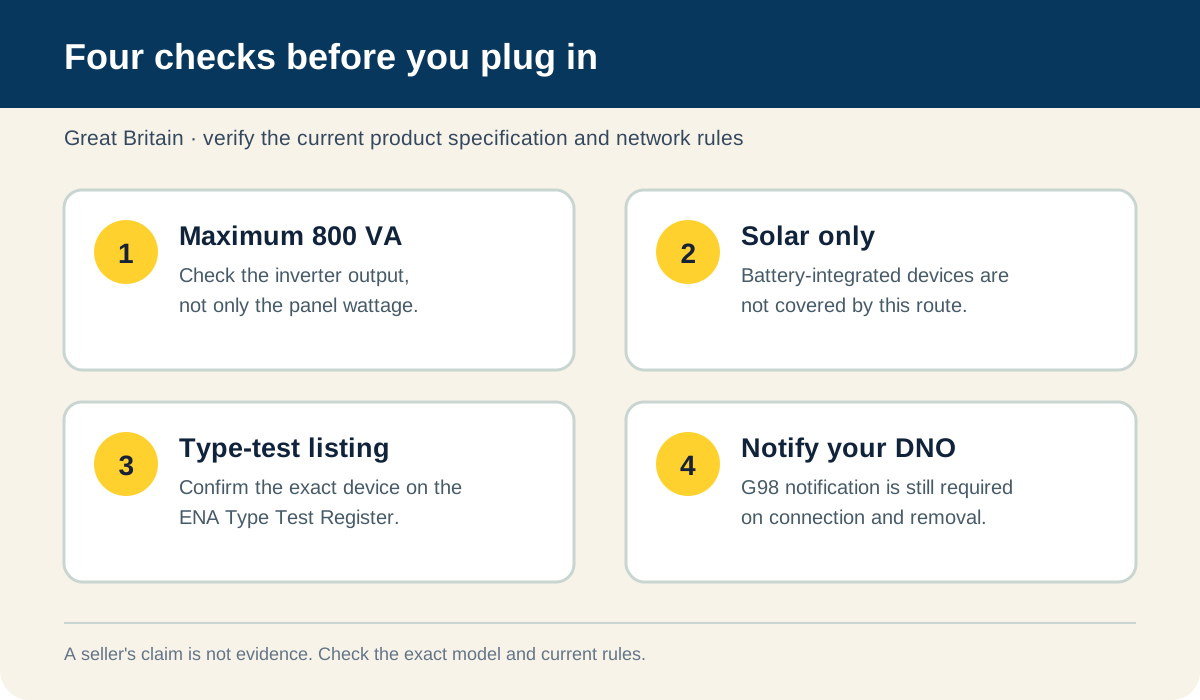
An 800 VA plug-in kit generates roughly 650 to 800 kWh a year. A typical 4kWp roof array generates 3,400 to 4,200 kWh. That is a factor of five in output on a capital difference of far less than five. If you own a suitable roof, a plug-in kit is not a cheaper version of solar: it is a different and much smaller thing.
- Plug-in (800 VA)
- 650–800 kWh/yr
- Rooftop (4kWp)
- 3,400–4,200 kWh/yr
- Ratio
- About 5:1
- Export income
- Rooftop only
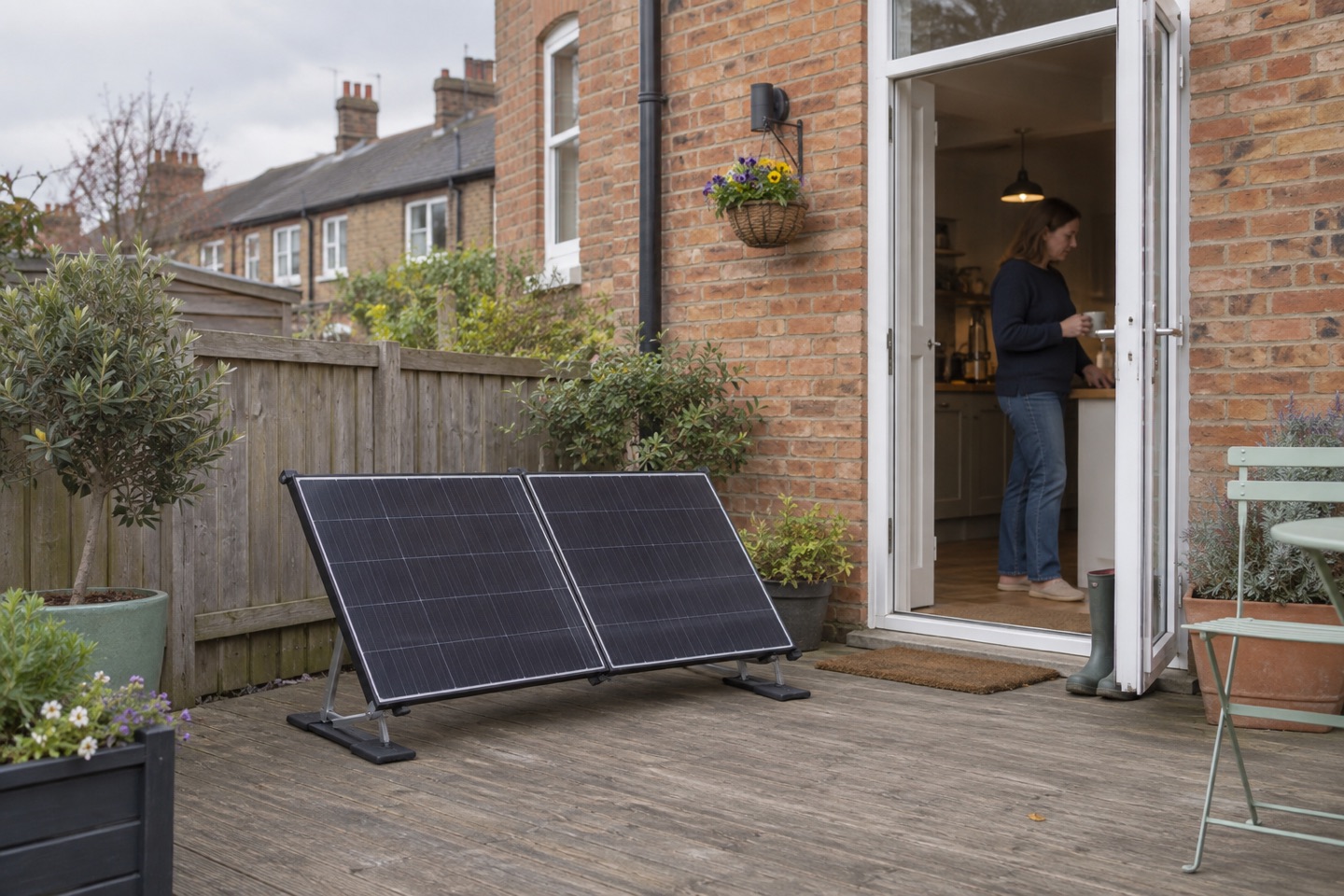
Since plug-in solar became legal in Great Britain on 27 August 2026, a lot of coverage has framed it as the affordable alternative to a rooftop installation. For people who cannot have a rooftop installation, that is exactly right. For people who can, it is misleading in a way that is worth spelling out with numbers.
The output gap
~5×
A 4kWp roof array against an 800 VA plug-in kit, in annual generation
| | Plug-in kit | Rooftop array | | --- | --- | --- | | Capacity | 800 VA (capped) | 4,000 W typical | | Annual generation | 650–800 kWh | 3,400–4,200 kWh | | Typical cost | £400–£700 | £6,000–£7,800 | | Paid for export? | No | Yes, via the Smart Export Guarantee | | Needs an installer? | No | Yes, MCS-certified | | Grant-eligible? | No | Yes, in principle | | Adds to home value? | No: it is portable | Generally neutral to positive |
The cost ratio is roughly ten to one. The output ratio is roughly five to one. On that basis the plug-in kit looks like the better deal per pound, and on a pure payback calculation it is: three to four years against eight to sixteen.
Why the payback figure is the wrong lens here
Payback measures how quickly you recover the money. It says nothing about how much money there is to recover.
A plug-in kit saves you perhaps £190 a year and then stops, because it is capped at 800 VA by law. There is no version where it saves more. A roof array saves several times that and keeps doing so for two decades, and it earns on top of that through an export tariff that the plug-in kit cannot access at all.
The way to think about it
A plug-in kit is a fast, small, complete answer. A roof array is a slow, large, compounding one. If you can only have the first, it is a good thing and worth having. If you can have the second, choosing the first because it pays back faster is optimising the wrong number.
Where a plug-in kit works well
Four situations, and they are not marginal: they cover a large fraction of UK households.
Choose plug-in
- You rent. A tenant cannot install a roof array without the landlord as applicant.
- You live in a flat. Permitted development does not apply, and a leasehold flat rarely has the roof rights.
- You expect to move within a few years. A plug-in kit goes with you; an array does not.
- Your usable space is a balcony, a wall or a fence rather than a roof slope.
Choose rooftop
- You own a house with a pitched roof facing anywhere but due north.
- You want to be paid for what you export.
- You have or plan a heat pump or an EV: 800 VA will not touch that load.
- You might qualify for grant funding, which a plug-in kit cannot access.
If you own a roof, here is the actual question
It is not “plug-in or rooftop”. It is whether a rooftop installation pays on your roof, which depends on orientation, shading, your consumption pattern and your export rate, and which depends on the property and local rules.
The payback calculator puts all six of those inputs on screen and lets you change every one, including the ones we have defaulted conservatively. It runs entirely in your browser and asks for nothing.
If the answer comes back at fourteen years and you were hoping for eight, that is useful information, and it is worth having before anyone knocks on your door with a quote.
Common questions
Can I have both?
Is a plug-in kit a good way to test whether solar suits my house?
Do plug-in kits get paid for export?
What about payback?
Sources
- DESNZ: Plug-in Solar Device Interim Product Specification v2.0 (July 2026)
- Ofgem: Smart Export Guarantee
- MCS: installation standards and certification
Checked 2026-09-02. Rates, rules and eligibility can change. Confirm current terms before signing a contract or applying for funding.
Work out the number before anyone quotes you
Every assumption editable, nothing sent anywhere, no email. It will not give you a quote, but it will tell you whether one is fair.
We are not taking quote requests yet
We will not collect your details until we can name the installers who would receive them, so there is no form here to fill in. What we can do is tell you when something changes: a scheme opening, an export rate moving, or the quote form going live.