The rates
Smart Export Guarantee rates compared
Not a government service. UKSolars is an independent company. It is not affiliated with, endorsed by or acting on behalf of the UK Government, DESNZ, Ofgem, MCS or any local authority. We do not administer any grant scheme, we cannot approve an application, and we never charge for anything a government provides free.
How we are paid. We are paid a fee by installers when we introduce a homeowner who asks for a quote. It does not change your price, and we are not paid more by one installer than another for the same job. In full.
Short answer
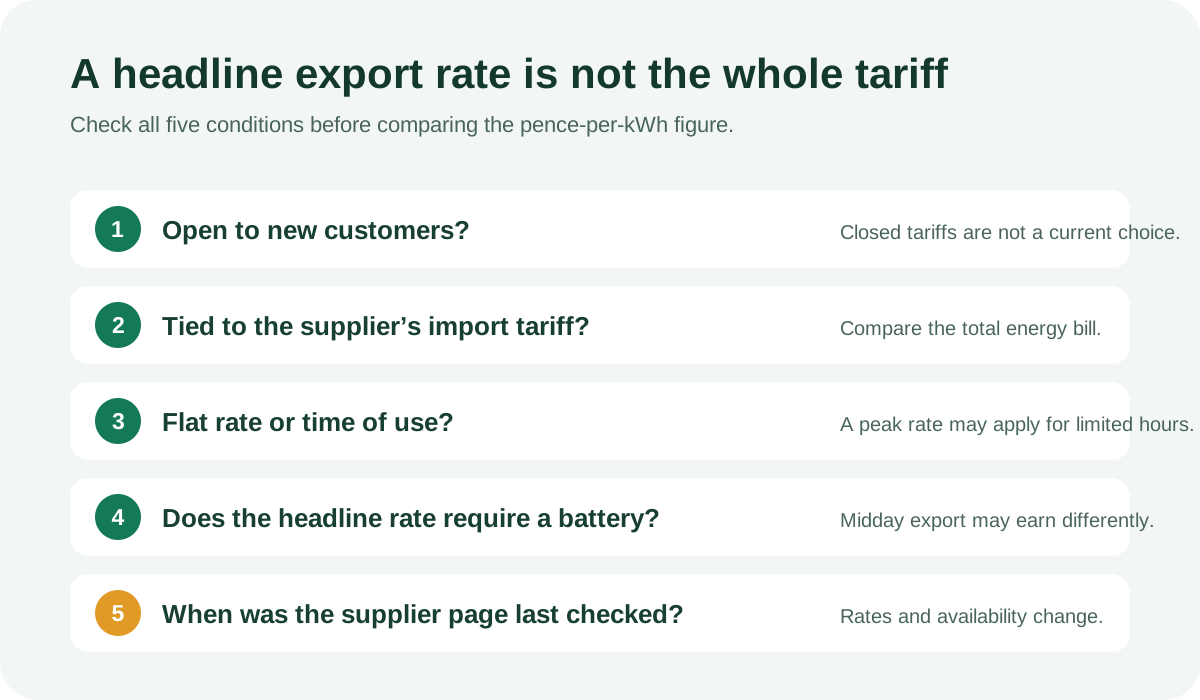
There is no single best SEG rate, because four things are being compared at once: whether the tariff is tied to taking your import from the same supplier, whether it is flat or time-of-use, whether it is still open to new customers, and whether the headline rate needs a battery. The table below separates all four, with a verification date on every row.
- Verified range
- 3p to 25p/kWh
- What splits them
- Four variables
- Verification
- Per row, monthly
- Best untied flat
- 6p/kWh
As checked on 1 September 2026, the highest flat rate in our verified table is 25p/kWh, but it is installation-exclusive: it requires Good Energy import supply and an eligible solar-plus-battery installation by Good Energy. The highest verified flat rate that does not require moving your import supply is 6p/kWh. Those are different answers to different questions, which is why a single “best rate” number is misleading.
The four variables
1. Tied or untied
A tied tariff requires you to buy your import electricity from the same supplier. An untied one does not.
This is the biggest single trap, because the arithmetic runs the wrong way round from how it feels. A typical household with solar still imports several times more than it exports. A higher tied export rate attached to an uncompetitive import tariff can cost you more over a year than a lower untied rate with your import supply wherever it is cheapest.
Compare the annual bill, not the export rate
The export line is the small number on your energy bill. The import line is the large one. Do not accept a more expensive import tariff solely to gain a higher export rate.
2. Flat or time-of-use
A flat rate pays the same for every exported unit. A time-of-use rate pays a high peak rate during a defined window, typically late afternoon and evening, and much less outside it.
Solar normally generates most strongly around the middle of the day. Without storage to hold generation until an evening peak window, a time-of-use headline rate may apply to little of your actual export.
One protection you do have
A supplier with 150,000 or more domestic customers is a mandatory SEG licensee and must offer at least one tariff paying above 0p/kWh at all times. Smaller suppliers may opt in voluntarily but are not obliged to offer anything at all.
Status is set for a whole SEG year, which runs 1 April to 31 March, based on customer numbers as at 31 December of the preceding year.
3. Open or closed to new customers
Tariffs change, close and acquire new eligibility conditions. A comparison is only useful if it says whether a new customer can join on the date shown.
4. Battery required
Some headline rates require a battery or are only useful when export can be shifted into a peak window. The table distinguishes an eligibility condition from a battery merely being helpful.
What the table below gives you
Every row states all four, plus the date it was last read from the supplier’s own published tariff page.
Why the date is per row and not per page
A page-level “last updated” tells you nothing about the row you are reading. It could mean every rate was re-checked, or that a typo was fixed in the introduction.
Stamping each row individually makes neglect visible, which is, in the end, the only thing that reliably prevents it. Rows we have not re-read say “not verified” rather than being presented as current.
What current supplier pages show
| Comparison | Verified result on 1 September 2026 | | --- | --- | | Highest published flat rate in this table | 25p/kWh: Good Energy Solar Savings Exclusive; tied and installation-exclusive | | Highest flat rate without moving import supply | 6p/kWh: E.ON Next Flex Export and ScottishPower SmartGen | | British Gas | 12p/kWh Export Premium with British Gas import; 3p/kWh standalone | | E.ON Next | 13p/kWh Next Export Exclusive v3; 6p/kWh untied Next Flex Export | | Octopus | 12p/kWh flat Outgoing Octopus for import customers; 4.1p/kWh standalone SEG |
These are supplier-published rates, not a recommendation. Eligibility wording and import prices still need checking before you switch.
How to choose
- Filter the table to untied and open to new customers. That is your realistic shortlist.
- If you have a battery, compare time-of-use rates and check when you can discharge.
- For any tied rate, price the supplier’s import tariff too and compare total annual cost.
- Check the verification date on the row before you act on it.
- Remember you can switch export supplier without switching import supplier.
If you are on a rate you agreed years ago and have not looked at since, review how the Smart Export Guarantee works and compare the total import-and-export position before moving.
What each supplier pays for exported solar
| Supplier | Tariff | Rate | Type | Tied to import? | Open to new? | Battery needed? | Last verified |
|---|---|---|---|---|---|---|---|
| Good Energy | Solar Savings Exclusive Fixed for 12 months. Requires solar panels and a battery installed by Good Energy, plus Good Energy import supply. | 25p | Flat | Tied | Open | Yes | 2026-09-01 |
| EDF | Export Exclusive 12m V3 Fixed for 12 months. For eligible residential customers buying a new solar or battery system through EDF/Contact Solar after 2 March 2026; EDF import supply required. | 18p | Flat | Tied | Open | No | 2026-09-01 |
| Octopus Energy | Prime Outgoing Pays 16p/kWh from 4pm to 7pm and 9p/kWh at other times. Designed for compatible battery customers; check current eligibility before switching. | 9p peak 16p | Time of use | Tied | Open | Yes | 2026-09-01 |
| ScottishPower | SmartGen Premium Plus Requires ScottishPower import supply and an eligible solar or battery installation bought through ScottishPower. | 15p | Flat | Tied | Open | No | 2026-09-01 |
| E.ON Next | Next Export Exclusive v3 Fixed for 12 months. Requires an eligible E.ON Next import tariff; time-of-use import tariffs are excluded. Residential systems up to 15kW. | 13p | Flat | Tied | Open | No | 2026-09-01 |
| EDF | Export 12m V2 Fixed for 12 months for eligible existing EDF residential electricity customers. | 13p | Flat | Tied | Open | No | 2026-09-01 |
| Octopus Energy | Outgoing Octopus Flat variable export rate for Octopus import customers. | 12p | Flat | Tied | Open | No | 2026-09-01 |
| British Gas | Export Premium Variable. Requires British Gas electricity supply; published for systems up to 15kW. | 12p | Flat | Tied | Open | No | 2026-09-01 |
| Good Energy | Solar Savings Variable. Requires Good Energy electricity supply. | 12p | Flat | Tied | Open | No | 2026-09-01 |
| ScottishPower | SmartGen Premium Requires ScottishPower import supply. | 12p | Flat | Tied | Open | No | 2026-09-01 |
| E.ON Next | Next Flex Export Variable export tariff. E.ON Next import supply is not required. | 6p | Flat | Untied | Open | No | 2026-09-01 |
| ScottishPower | SmartGen Available without moving import supply to ScottishPower. | 6p | Flat | Untied | Open | No | 2026-09-01 |
| EDF | SEG Export Variable Value Variable rate for eligible existing EDF electricity customers. | 5.6p | Flat | Tied | Open | No | 2026-09-01 |
| Octopus Energy | SEG tariff Standalone SEG option for eligible generators whose import supply is with another supplier. | 4.1p | Flat | Untied | Open | No | 2026-09-01 |
| British Gas | Export SEG Variable standalone export tariff for customers whose import supply is elsewhere. | 3p | Flat | Untied | Open | No | 2026-09-01 |
| EDF | SEG Export Variable Variable standalone tariff; EDF import supply is not required. | 3p | Flat | Untied | Open | No | 2026-09-01 |
Every row is re-read from the supplier’s own tariff page monthly. Compare the untied column before the rate: a higher tied export rate can still lose once the import tariff is counted.
Common questions
What is the highest SEG rate in the UK?
What does "tied" mean?
Can I have import and export with different suppliers?
Why do different sites quote completely different best rates?
Do I need a battery to get a good rate?
Is any supplier allowed to pay me nothing?
What do I need to qualify at all?
How often is this table checked?
Sources
- Ofgem: Smart Export Guarantee: electricity suppliers
- Ofgem: Smart Export Guarantee: generators
- Octopus Energy: Outgoing tariffs
- E.ON Next: Smart Export Guarantee
- Good Energy: Smart Export Guarantee
Checked 2026-09-02. Rates, rules and eligibility can change. Confirm current terms before signing a contract or applying for funding.
Get important solar updates
One email when a grant, export rate or rule changes. No newsletters or sales emails.