Sizing
Sizing a home battery
Short answer
Size a home battery from two measured amounts: surplus solar available to charge it and electricity used outside solar hours. Choose usable capacity near the smaller recurring amount, then check power output, seasonal variation, losses and any reserve kept for backup. Array size or bedroom count alone is not enough.
- Measure
- Surplus and evening demand
- Capacity to compare
- Usable kWh
- Separate limit
- Charge/discharge power
- Allow for
- Winter and conversion losses
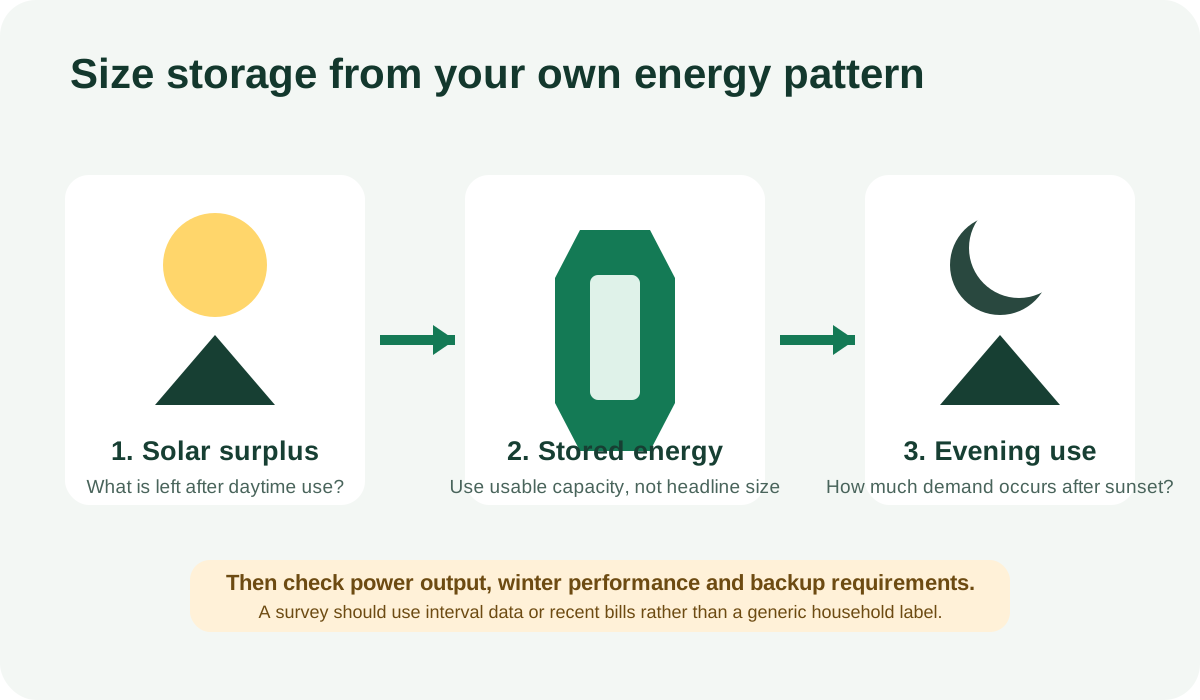
Battery capacity is quoted in kilowatt-hours. The usable figure is the part available within the manufacturer’s operating limits; it can be lower than the nameplate capacity.
A practical sizing method
- Download several weeks of half-hourly electricity use, including weekdays and weekends.
- Use solar monitoring to find how much generation is normally exported on suitable days.
- Measure electricity used after meaningful solar generation has ended.
- Start near the smaller recurring figure, then test summer and winter separately.
- Check charge and discharge power against the appliances you expect it to support.
Do not size from one sunny day
A large battery may fill easily in June and rarely fill in December. Ask the installer to show monthly estimates and the expected number of useful cycles, not only the best day of the year.
Capacity and power are different
Capacity says how much energy can be stored. Power says how quickly it can be supplied. A battery may contain enough energy for the evening but still be unable to run every high-load appliance together. Backup operation may also reserve part of the usable capacity.
Take the chosen size to the battery cost guide and compare the extra annual value of each larger option with its extra installed cost.
Common questions
Is a 5kWh battery enough?
Should battery capacity match the solar array size?
Sources
- Energy Saving Trust: battery size and cost guidance
- MCS guidance: PV self-consumption with electrical storage
Checked 2026-09-09. Rates, rules and eligibility can change. Confirm current terms before signing a contract or applying for funding.
Work out the number before anyone quotes you
Every assumption editable, nothing sent anywhere, no email. It will not give you a quote, but it will tell you whether one is fair.
We are not taking quote requests yet
We will not collect your details until we can name the installers who would receive them, so there is no form here to fill in. What we can do is tell you when something changes: a scheme opening, an export rate moving, or the quote form going live.