Is it worth it, and what will it cost?
Solar panel costs in the UK
Not a government service. UKSolars is an independent company. It is not affiliated with, endorsed by or acting on behalf of the UK Government, DESNZ, Ofgem, MCS or any local authority. We do not administer any grant scheme, we cannot approve an application, and we never charge for anything a government provides free.
How we are paid. We are paid a fee by installers when we introduce a homeowner who asks for a quote. It does not change your price, and we are not paid more by one installer than another for the same job. In full.
Short answer
A typical 4.4kWp UK system: about ten panels: costs roughly £6,000 to £7,800 installed, and the national average job value is around £7,279. Scaffolding, a consumer unit upgrade and bird proofing can add £1,200 to £2,900 on top, and are frequently missing from the first quote you are shown.
- 4.4kWp installed
- £6,000–£7,800
- UK average job
- ~£7,279
- Usually excluded
- £1,200–£2,900
- VAT
- 0% until March 2027
Most cost pages in this category give you a headline number and a payback table. The headline number is usually about right. The payback table is where they fall apart: one page ranking for this term publishes a break-even table showing the same number of years for three different system sizes, which cannot be true unless cost and yield scale identically, and they do not.
So this page does two things instead: gives you the price ranges with what they exclude, and hands you the model rather than the answer.
The install cost
Panel prices are relatively standard. UK quotes vary more because of access, electrical work and roof condition. Two quotes for the same array can differ by £1,500 without either being wrong.
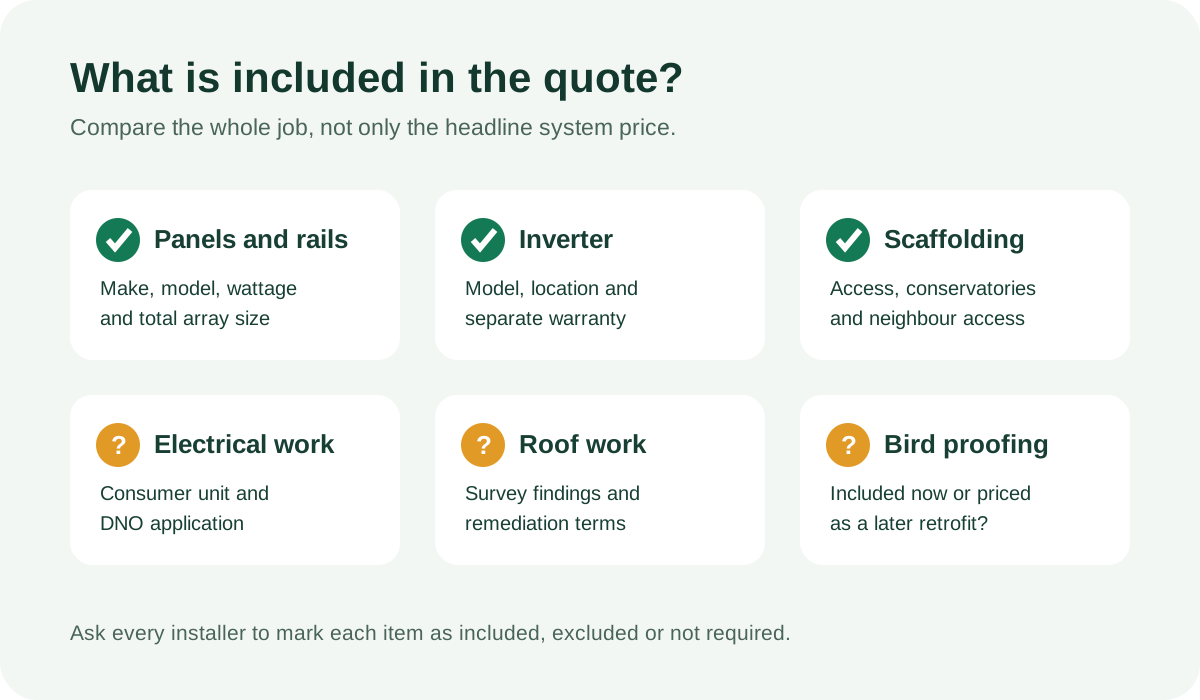
The costs left off the first quote
Check which additional works are included before comparing totals.
A quote without these is not cheaper: it is incomplete
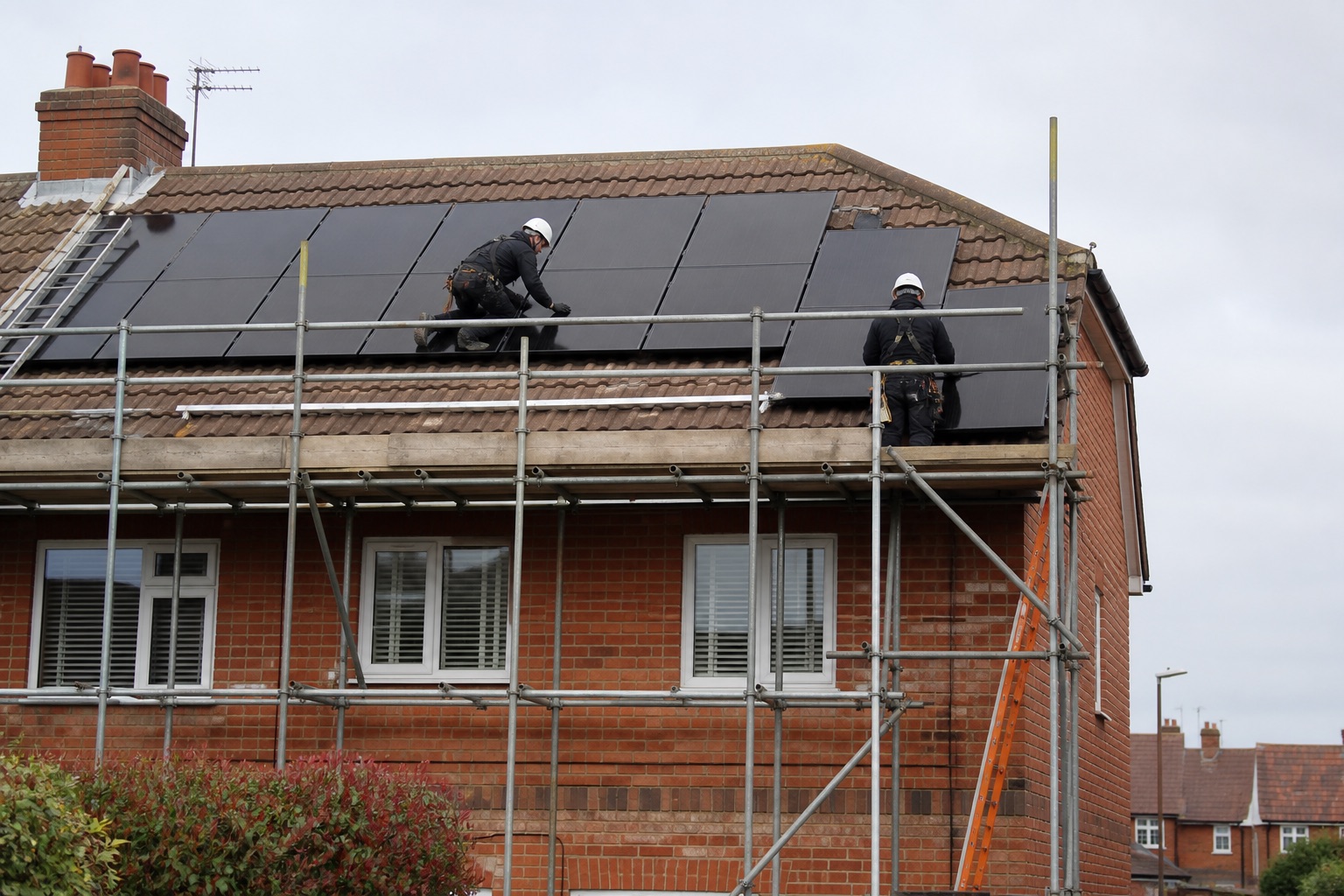
Scaffolding is required on many jobs and varies with access. It is also often excluded from headline prices. If one quote is £900 below the others, check whether scaffolding is in it before you conclude anything.
Payback: why we will not give you one number
For many UK households the estimate is 8 to 16 years. The range reflects differences between properties and usage.
Six inputs drive it:
- Installed cost: the final amount you pay.
- Yield: kWh per kWp per year, set by orientation, pitch and shading.
- Self-consumption share: the proportion you use rather than export. This is the big one.
- Import price: what you avoid paying, currently around 27p per unit.
- Export rate: what you are paid. The best untied flat rate in our table was 6p/kWh on 1 September 2026.
- Inverter replacement: £800 to £1,800, typically at year 10 to 15.
~15p
The gap between using a unit yourself and exporting it. Self-consumption share is the input that moves payback most, which is why it is the one worth arguing about
Import based on typical price cap unit rates; export from the best widely available untied flat rate
A household that is out on weekdays with no battery typically self-consumes 30 to 40% of what it generates. Someone working from home, or with a battery, an EV or a heat pump, can reach 60 to 80%. Same roof, same cost, very different payback.
A single national payback figure cannot account for these factors. The calculator lets you change all six inputs.
What our model deliberately leaves out
No electricity price inflation, and no discount rate.
Both are defensible, both cut in opposite directions, and both are the levers by which a payback figure gets quietly engineered down to a marketable number. Leaving them out keeps the result conservative and the arithmetic checkable. If you want to model rising prices, raise the import price input and watch what happens.
What you should be comparing between quotes
- Total kWp and panel count, and the panel make and model.
- Inverter make and model, and its warranty separately from the panel warranty: they are rarely the same length.
- The generation estimate and its assumptions: orientation, pitch, shading. A single confident number with no working is a sales figure.
- Scaffolding, in or out.
- Consumer unit upgrade, in or out.
- Bird proofing, in or out.
- What happens if the survey finds the roof needs work: before you have paid a deposit.
- Who handles the DNO application, and whether the system needs G99 approval.
On funding, before you spend anything
Three things are worth checking first:
- 0% VAT applies to every domestic installation until 31 March 2027 regardless of income. There is nothing to apply for.
- Grant funding exists but is narrow: broadly, a means-tested benefit or income under £36,000 plus an EPC of D to G. If that might be you, check before you buy, because you cannot claim retrospectively.
- An export tariff is worth choosing deliberately. The spread between suppliers is wide and the best headline rates are usually tied to taking your import from the same company.
Cost data
The UK Solar Cost Index uses the latest DESNZ regional table, derived from MCS installation records. It is a benchmark rather than a quote for your roof.
Installed cost by system size
| System | Panels | Roof area | Typical installed cost | Usually suits |
|---|---|---|---|---|
| 3.5 kWp | 8 | 16 m² | £5,000–£6,500 | A 1–2 bedroom home, or a low-usage household |
| 4.4 kWp | 10 | 20 m² | £6,000–£7,800 | The UK median installation — a 3 bedroom semi |
| 5.3 kWp | 12 | 24 m² | £7,000–£9,000 | A 3–4 bedroom home with a heat pump or an EV |
| 6.2 kWp | 14 | 28 m² | £8,000–£10,500 | A 4+ bedroom home, high daytime usage |
| 7 kWp | 16 | 32 m² | £9,000–£12,000 | Large detached, usually needing G99 approval |
These bands have not yet been rebuilt from an MCS extraction, so no data month is shown. Ranges are indicative, not a quote.
Common questions
How much do 10 solar panels cost in the UK?
What does a 4kW system with a battery cost?
Why are the quotes I have been given so different?
Is VAT included?
How long until it pays for itself?
Sources
- MCS: installation data and standards
- DESNZ: Solar photovoltaics deployment statistics
- HMRC: VAT Notice 708/6: energy-saving materials
Checked 2026-09-02. Rates, rules and eligibility can change. Confirm current terms before signing a contract or applying for funding.
What will solar cost you, and when does it pay back?
Set your roof size, your bill, your tariff and your export rate, and see the install cost, annual saving and payback year — with every assumption visible and editable. Runs in your browser; nothing is sent anywhere.
Get important solar updates
One email when a grant, export rate or rule changes. No newsletters or sales emails.